Perineal massage during pregnancy: how to do it and when to start
If you're pregnant, you've probably already heard about perineal massage during pregnancy. How do I do it? When do I start?
Let's start with the most important thing: perineal massage is only one part of pelvic floor preparation and should always be done with the support of a qualified professional.
We recommend you see a physiotherapist specializing in pelvic floor rehabilitation for an assessment during pregnancy and to help you with proper follow-up during the postpartum period to avoid complications.
In this post, we'll tell you everything you need to know about the pelvic floor, perineal massage, and what you can do to avoid episiotomy and other dysfunctions of the perineal area. Let's get started!
In this article you will find:

DOWNLOAD OUR FREE GUIDE TO SURVIVING POSTPARTUM
Want to plan your postpartum period like a pro? Discover everything no one has told you about the real postpartum experience in our guide—you'll be glad you knew!
What is the pelvic floor or perineum?
The pelvic floor, or perineum, is the group of muscles and ligaments that support and hold up the pelvic organs (the bladder, urethra, uterus, vagina, rectum, and anus). But why is it so important? Because, although we may not be fully aware of it, it plays a crucial role in vital physiological functions.
Despite its importance, it's largely unknown, and we don't pay much attention to it until it starts causing problems. Do you know what basic functions it performs?
-
Support: It keeps the pelvic organs in the correct position.
-
Reproductive: The pelvic floor is "the last door" that the baby crosses during childbirth, and it is responsible for helping the baby rotate its head and for the expulsive reflex that generates the desire to expel.
-
Continence: It is responsible for urinary and fecal continence.
-
Sexual: because a toned pelvic floor is key to better quality sexual relations

How do pregnancy and childbirth affect the pelvic floor?
It is not surprising, then, that pregnancy and childbirth are a great challenge for the pelvic floor.
Weight gain during pregnancy puts extra pressure on the pelvic area, which, together with increased tissue elasticity due to hormonal factors, weakens the muscles in the area.
Childbirth pushes the entire structure to its limits.
So both pregnancy and childbirth are the origin of many of the most common discomforts such as prolapses, incontinence or sexual dysfunctions, especially if we do not take care of our pelvic floor both before and after childbirth.
What is perineal massage?
Perineal massage is a manual technique for gentle stretching of the pelvic floor To prepare the muscles and skin between the vagina and rectum for childbirth. The goal is to reduce the incidence of pelvic floor injuries such as tears, episiotomies, or other dysfunctions like postpartum pelvic pain.
In addition, perineal massage It helps you become familiar with the sensation of stretching. of the perineal area that will be present during childbirth (improves proprioception), which can be very useful during the expulsive phase.
What are the benefits of perineal massage?
The main benefit of perineal massage is that the skin surrounding the perineum becomes more flexible during childbirth and protects it against tearing and episiotomies.
Perineal massage, along with other pelvic floor preparation techniques, not only helps during childbirth, but also promotes a much gentler postpartum recovery.
We break down the main benefits of perineal massage for you:
-
Increases elasticity of the perineum.
-
It promotes blood circulation in the area, facilitating relaxation of those muscles during childbirth.
-
Power the self-knowledge
-
It reduces the incidence of perineal injuries such as episiotomy.
-
It reduces pain in that area after childbirth.
-
They have no harmful effects.
-
You can do it alone or with your partner.
When should I start perineal massage?
It is recommended to start between weeks 32 and 34 of pregnancy, and to do it at least twice a week (although it can be done daily).
Consistency, as with any muscle training, is key!
How do you perform a perineal massage?
Perineal massage focuses on the area between the vagina and the anal sphincter, in the space of the central fibrous core of the perineum.
It must be done using a lubricant or a natural oil and includes the following steps:
-
Insert your thumbs into the vagina about 2-3 cm. Apply gentle pressure towards the anus.
-
Make a gentle rocking motion with your thumbs, like the hands of a clock (from 9 o'clock to 3 o'clock, back and forth).
-
Apply gentle pressure towards the anus and outwards at the same time, for approximately 2-3 minutes.
The entire massage should last between 5-10 minutes and should be performed twice a week until delivery.
As we mentioned at the beginning, We recommend consulting a pelvic floor professional for an assessment. (This is best done in the second trimester) as it can also assist you in the overall care of the pelvic floor, including perineal massage.
We're sharing a video from En suelo firme (On Firm Ground), with tips and tricks on where, when, and how to do it. No one can explain it better than a specialist:
Here are a few things to keep in mind:
-
Wash your hands before starting the massage.
-
Try not to have excessively long nails.
-
Empty your bladder before the massage.
-
Opt to have a mirror handy to check that you are performing the massage correctly.
-
Find a comfortable place: at the edge of the bed, the bidet, in the bathtub or squatting are the best options for performing the massage.
-
You can use hot or cold pads to warm and relax the area.
-
If you're giving yourself a massage, use your thumbs. If someone else is doing it, use your index or middle fingers.
-
Lubricate your fingers with oil or lubricant before inserting them into the vagina.
-
Perform massages of at least 5 to 10 minutes, at least 2 days a week.
-
Alone or with a partner?
If you both feel like it, your partner can participate in the massage, thus improving intimacy; something that is generally lacking in the last weeks of pregnancy and the first months postpartum.
DOWNLOAD OUR FREE GUIDE TO SURVIVING POSTPARTUM
Want to plan your postpartum period like a pro? Discover everything no one has told you about the real postpartum experience in our guide—you'll be glad you knew!
Specific products for a safe and effective massage
Although performing perineal massage is not a complex practice, there are products that can help you not only in the process, but also in the result.
Using heat pads to relax the perineal area, a specific lubricant to avoid friction, or a natural oil to moisturize the skin are the best allies you can have.
Whether you perform the perineal massage yourself, or your partner does it for you.
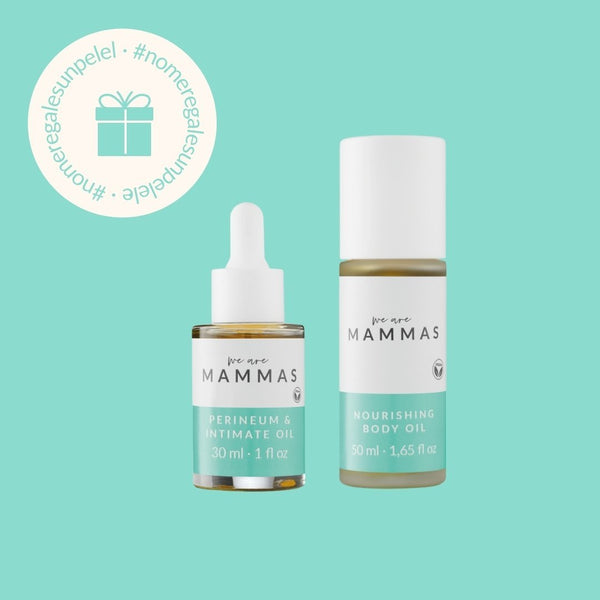
He intimate and perineal oil It contains a unique blend of natural oils that help nourish and protect even the most delicate skin when it needs it most.
-
This oil is ideal for nourishing the skin of the perineum and performing regular massages from week 32 of pregnancy until delivery.
-
It is vegan and contains jojoba oil, argan oil, olive oil, calendula extract, centella asiatica and chamomile.
Unlike gel pads, clay offers a long-lasting and gradual temperature.
-
For perineal massage, use its heat mode by easily heating it in the microwave for 25 seconds.
-
Spread the clay on the pad and check if it is your desired temperature.
-
If you don't reach the desired temperature, try for 5 more seconds.
-
Place it in its cotton cover and cover the perianal area to relax it.
-
Uncomplicated, pleasant and safe.
Oil is an important moisturizer, but you can complete your perineal massage essentials with a water-based lubricant.
He postpartum sex kit It includes a lubricant with hyaluronic acid, a super-hydrating molecule ideal for preventing friction during perineal massages and highly recommended for first-time postpartum sexual relations.
When is perineal massage not recommended and why you should see a physiotherapist before starting?
There are situations in which perineal massage is not recommended, so we advise you to see a physiotherapist specializing in pelvic floor health before starting.
An early evaluation by a specialist will also help us prevent other dysfunctions, as we've already mentioned. The main reasons why we should avoid perineal massage are:
-
If we suffer from vulvar varicose veins
-
If we suffer from vaginal or urinary infections
-
Risk of premature birth
-
In the face of other pregnancy complications
Perineal trauma and episiotomy
Having all the information at hand is the best way to avoid unpleasant surprises, so below we tell you everything you need to know about episiotomy and other perineal injuries.
Did you know that the dilation of the vaginal muscles during childbirth, to allow the baby's head to pass through, is the most extreme stretching exercise the human body is asked to do in such a short period of time?
Therefore, perineal trauma, whether natural (tearing) or instrumental (episiotomy), is common in childbirth.
Episiotomy - Definition from the RAE (Royal Spanish Academy): f. Med. Surgical incision in the vulva performed during certain childbirths to facilitate the delivery of the fetus and prevent tearing of the perineum
Episiotomy - origin:
-
Before the 18th century, the surviving written information speaks of pelvic floor protection, but it is not until 1742 that we find the first written mention of this procedure and it is not until 1810 that it appears in the first medical publication.At that point, as childbirth begins to move from home (attended by close female relatives or midwives) to the hospital (attended by doctors), the incidence of episiotomy begins to increase.
-
From 1940 to 1980, its popularity grew, reaching an incidence of up to 80%.
-
It was around 1980 that the benefits of routine episiotomy began to be questioned, and research began to be conducted. Since the 1990s, when the first studies demonstrated that the procedure offers no benefit in uncomplicated deliveries, its use has declined.
-
However, Spain has an episiotomy rate of 43%, placing it as the eighth country with the highest rates out of the 29 countries included in the report. European Perinatal Health Report.
Indicating your preferences in the birth plan can be very helpful in guiding the professionals who care for you.

When is an episiotomy necessary?
Although, as the WHO indicates, episiotomy is not a necessary procedure in normal, uncomplicated deliveries, there are situations where the risk to the mother or baby may make it necessary. Some factors that increase the risk of needing an episiotomy are:
-
A high birth weight baby
-
First-time mothers
-
The advanced age of the mother
-
Instrumental delivery
-
Lack of support during the expulsion
-
Non-cephalic baby position
-
In the presence of signs of fetal distress
-
Induction of labor
-
The use of epidural
Are there any factors that reduce the risk of episiotomy?
Although there is not much research, both midwives and physiotherapists specializing in pelvic floor health agree that the following factors reduce the incidence and severity of injuries:
-
Perineal preparation: It involves an assessment of the pelvic floor's condition during pregnancy and recommendations that may or may not include perineal massage.
-
Perineal massage: It helps improve the tone and elasticity of the perineum, if recommended by a specialist.
-
Support during the expulsion phase
-
Mother's education for childbirth: Knowing the stages of childbirth in advance and putting your intervention preferences in writing can help
-
The professional's judgment during the expulsion
Perineal massage after childbirth
The perineal skin also needs care after childbirth, especially if discomfort is experienced during sexual intercourse. Once any birth scars have healed and want to start rekindling intimacy with your partner, Perineal massage can help you both physically and relationally.
On a physical level, stimulating the area, keeping it hydrated and relaxed can be essential for to restore both skin flexibility and muscle tone. In addition, a well-groomed area will prevent or reduce discomfort during penetrative sex.
On an emotional level, sharing moments of physical contact is important to regain intimacy, even if the relationships are not entirely satisfactory at first or do not develop in the way they did before pregnancy and childbirth. Returning to normal is a matter of time and patience..
Any questions? Consult a specialist
As we have mentioned, it is advisable that before starting perineal massage you speak with your midwife or physiotherapist so that they can offer you the necessary recommendations.