Sleep deprivation in the postpartum: what it is, how it affects you and what to do to survive
Sleep deprivation in the postpartum period is not just about being tired.
It is a physiological, emotional, and mental experience that can profoundly affect your well-being.
Sleeping poorly after having a baby is expected.
But normal doesn't mean easy. Nor does it mean you have to endure it without support.
In this article we explain why it happens, how it impacts your body, and what strategies can help you navigate this stage with more support and less guilt.
What is postpartum sleep deprivation?
Postpartum sleep deprivation occurs when you are unable to get enough sleep or when your rest is constantly interrupted.
During the first few months, babies need to be fed and cared for every few hours. This fragments their sleep and prevents their bodies from entering deep sleep stages.
The result is not just sleeping little.
It's not getting enough sleep to recover.
And that, accumulated over time, has real consequences.
Why is sleep so difficult after having a baby?
It's not just a matter of schedules.
After childbirth, the body undergoes multiple changes that directly affect rest:
- Sudden hormonal changes
- State of constant alert
- Physical recovery from childbirth
- Emotional adaptation to a new reality
Furthermore, the mother's brain becomes more sensitive to the baby's stimuli. In other words, you are biologically programmed to wake up.
That's why, even when you have the opportunity to sleep, it's not always easy to do so.
How lack of sleep affects the body and mind
Sleep deprivation in the postpartum period has an impact far beyond tiredness.
It may affect:
- Memory and concentration
- Emotional regulation
- Stress tolerance
- The immune system
- The perception of pain
It is also directly related to a higher risk of postpartum anxiety and depression.
If you feel overwhelmed by everything, it doesn't mean you can't handle motherhood.
You may simply be deeply exhausted.
The myth of “sleep when the baby sleeps”
It is probably the most repeated advice.
And also one of the most frustrating.
Because in practice:
- It doesn't always match your needs
- Your body may be too activated to sleep
- There are basic tasks that you also need to cover.
Here it's important to change the approach:
👉 Not all rest has to be sleep.
Lying down, closing your eyes, or disconnecting for a few minutes also helps your nervous system.
How to survive sleep deprivation in the postpartum period
There are no perfect formulas.
But there are strategies that can make a real difference.
Prioritize blocks of sleep, not isolated hours
Sleeping 4-5 hours straight is much more restorative than fragmented sleep.
To achieve this, you can:
- Take turns with your partner
- Delegate some decisions
- Ask for external help
It's not about doing everything yourself. It's about supporting yourself.
Ask for help (even if it's difficult)
Sleep is a physiological necessity, not a luxury.
Accepting help can be key to your recovery:
- Family
- Friendships
- Support professionals
Sleeping while someone else takes care of you is also a form of care.
Introduce micro-breaks
When sleep is not possible, rest is still important.
Proof:
- Lie down for 10–20 minutes
- Reduce stimuli
- Breathe consciously
These small spaces help regulate the nervous system.
Lower the bar
Postpartum is not the time to optimize your life.
It's time to:
- Prioritize the essentials
- Let go of unrealistic expectations
- Reduce self-criticism
Just surviving is enough.
Create a small rest routine (even if it's imperfect)
This is where we can introduce something key: You can't always sleep more, but you can rest better..
Small rituals can help your body slow down:
- A hot shower before bed
- A moment of calm without stimuli
- Body care that brings you back to your body
For example, many mothers find relief in creating a small moment for themselves at the end of the day, even if it lasts 5 minutes.
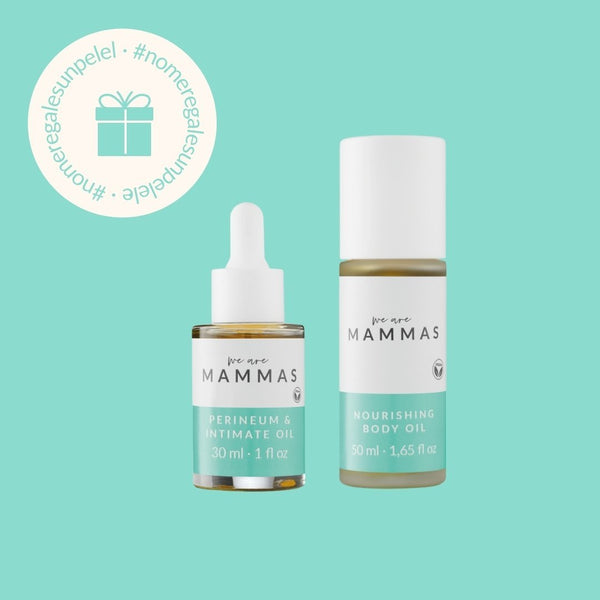
👉 A gesture as simple as using a soothing perineal spray It can help reduce physical discomfort and facilitate that moment of pause before trying to sleep.
The body also needs to recover in order to rest.
Sleep doesn't just depend on the baby.
It also depends on how your body feels.
If there is pain, inflammation, or discomfort, resting becomes much more difficult.
This is where physical self-care ceases to be optional.
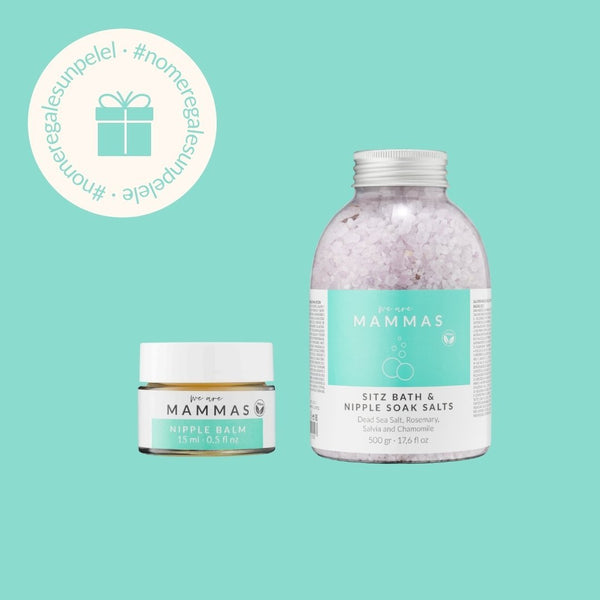
👉 Incorporate sitz baths with Dead Sea mineral salts It can help relax the perineal area, reduce discomfort, and promote a more restful state.
It's not just about care.
It's about making it easier for the body to let go.
How your rest influences your baby's well-being
Your rest also impacts how you relate to your baby.
When you are less fatigued:
- You respond more calmly
- You have greater connection capacity
- You enjoy the connection more.
Taking care of yourself doesn't mean separating yourself from your baby.
It's about maintaining a better relationship.
When to seek professional help
There are situations in which it is important to seek support:
- You can't sleep even when you have the chance
- You constantly feel overwhelmed
- There is anxiety or intrusive thoughts
- You feel like you can't take it anymore.
Sleep deprivation can seriously affect mental health.
And you don't have to go through it alone.
The postpartum period should not be experienced in extreme exhaustion.
Yes, it's an intense stage.
Yes, the dream changes.
But that doesn't mean that exhaustion has to be total and constant.
You need rest.
You need support.
And you need spaces where you are also cared for.
In We Are Mammas
We know that postpartum is not just about the baby.
It is everything that happens in the body, mind, and life of the mother.
That's why we create solutions designed to support you in real life.
In fragmented nights. In accumulated fatigue. In moments when you need to stop, even if just for a little while.
👉 Discover our postpartum care routine and build your own ideal sleep system.